
The Best eSIM for Travel: Compare Plans, Coverage, and Costs
The best eSIM for travel is a digital SIM card that lets you connect to local mobile networks abroad without needing a physical card. It works by downloading a carrier profile onto your device, which you can activate instantly upon arrival to avoid roaming fees. Its key benefit is seamless connectivity, allowing you to manage multiple plans on one device and switch between them as you travel.
Why Your Next Trip Needs a Digital SIM

You step off the plane, and your phone buzzes with a best eSIM for travel already active. No fumbling for a local SIM card, no overpriced roaming, no queuing at a kiosk. Your next trip needs a digital SIM because it lets you buy and install an eSIM before you leave home, connecting the moment you land. You can keep your home number active for calls and texts while using the eSIM exclusively for data, so you’re never unreachable. Activating is just scanning a QR code or tapping an app, not swapping tiny plastic cards. You choose your data plan—1GB for a weekend or unlimited for two weeks—and top up instantly if you run out. With a digital SIM, your travel starts with connectivity, not a problem.
What an eSIM is and how it works abroad
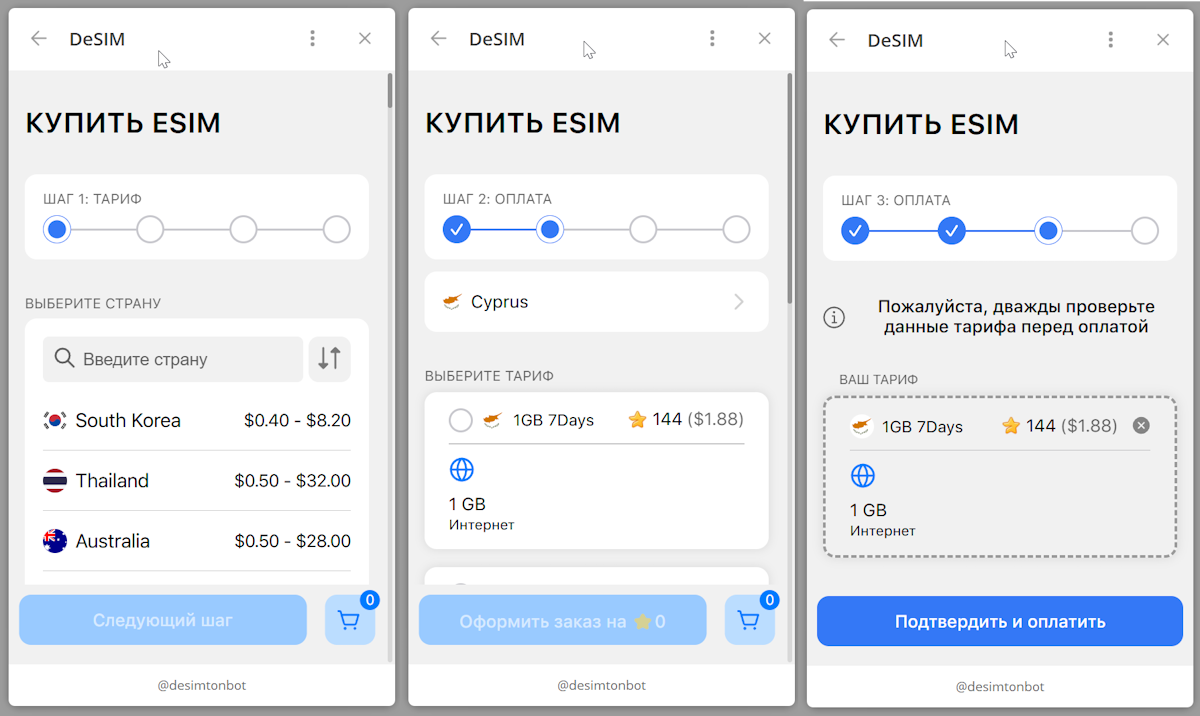
An eSIM is a tiny, programmable chip built into your phone that acts like a digital SIM card. Before you travel, you simply buy a plan online and scan a QR code or download a profile to activate it. Switching to a local network abroad is seamless because you manage everything from your phone’s settings. Once activated, your device connects to partner towers in your destination, letting you use data, calls, and texts just like you would at home—without swapping physical cards. The setup process follows a clear sequence:
- Purchase an eSIM travel plan for your destination.
- Scan the provided QR code or install the profile in your phone settings.
- Turn on the eSIM line, and you’re instantly connected abroad.
Key benefits over physical roaming cards
Unlike physical roaming cards, digital SIMs eliminate the need to physically swap cards, preventing loss or damage to your primary SIM. You can activate and manage data plans instantly via an app before departure, avoiding airport queues or incompatible card slots. Coverage is often more reliable, as eSIM profiles can connect to stronger local networks automatically rather than a single partnered carrier. There is no risk of exceeding a physical card’s strict data cap with no top-up option; digital plans frequently offer flexible, real-time data additions. Finally, you retain your home number for calls and texts, removing the dual-phone hassle that roaming cards require.
Compatibility check: devices and carriers
Before purchasing the best eSIM for travel, verify your device’s compatibility by checking it is unlocked and supports eSIM profiles—most recent iPhones, Pixels, and Samsung Galaxy models do, but older or carrier-locked phones may not. Next, confirm your destination’s carriers are supported by the eSIM provider, as coverage varies significantly between regions; a comprehensive carrier whitelist within the provider’s app or website ensures you won’t arrive without service. Some eSIMs only work on specific partner networks, so comparing available bands against your device’s supported frequencies prevents connectivity gaps. This dual check avoids activation failures and roaming blackouts.
Top Global eSIM Providers Compared
For travel, comparing top global eSIM providers narrows to a few key players. Airalo offers broad regional plans ideal for multi-country trips, but its data speeds can be throttled after fair usage thresholds. Holafly shines with unlimited data packages for single destinations, making it perfect for heavy streamers. For professionals, **Airalo’s global plans** and Holafly’s unlimited options are reliable, but Ubigi often provides superior speed on Japanese and French networks. To get the best eSIM for travel, match the provider to your itinerary: Airalo for coverage breadth, Holafly for data-hungry stays, and Ubigi for stability in specific high-speed regions like Europe or Asia.
Airalo: extensive coverage and easy top-ups
Airalo stands out among top global eSIM providers by offering extensive coverage across 200+ countries, making it a reliable choice for multi-destination travelers. Its platform simplifies connectivity with effortless top-ups directly through the app—no physical SIM swaps needed. You can manage plans on the go, adding data instantly as you travel, which eliminates hunting for local vendors. This combination of broad regional reach and streamlined recharges ensures you stay online without interruptions.
Airalo’s expansive network and quick, in-app top-ups give travelers seamless, on-demand connectivity anywhere.
Holafly: unlimited data plans for heavy users
For heavy users, Holafly’s unlimited data eSIM plans remove the stress of tracking gigabyte consumption. You can stream, video-call, and navigate intensively without speed throttling, as the data cap simply vanishes. This contrasts with capped plans that cut you off or slow to unusable speeds. However, most Holafly unlimited plans do not include a local phone number, meaning you rely entirely on VoIP for calls. **Is Holafly’s unlimited data suitable for tethering on multiple devices?** Yes, you can share the connection via hotspot, though speeds may vary based on local network congestion, making it a strong pick for laptop-reliant travelers.
Nomad: pay-as-you-go flexibility
Nomad’s pay-as-you-go flexibility avoids long-term commitment, allowing travelers to purchase top-up data only when needed. This model suits those with unpredictable itineraries, as unused credit does not expire rapidly on most plans. The on-demand data scaling means users can start with a small bundle for a few days, then add more if extending a trip. Unlike fixed monthly subscriptions, Nomad’s approach lets you pause connectivity entirely between trips, paying solely for active usage windows. This granular control over spending and validity makes it a logical choice for budget-conscious travelers navigating multiple destinations.
Ubigi: reliable speeds in Asia and Europe
When traveling across Asia or Europe, Ubigi delivers consistently reliable speeds for global travelers without frustrating drop-offs. In busy hubs like Tokyo’s Shibuya or Paris’s Gare du Nord, data-intensive tasks such as navigating live maps or uploading travel videos remain responsive and snappy. Ubigi’s network prioritizes steady throughput even during peak hours, meaning you won’t notice lag while streaming a train playlist or video-calling home. For multi-country trips, that same reliability holds from Seoul to Berlin, letting you rely on a single eSIM instead of hunting for local SIMs. Ubigi’s Asia-Europe coverage clearly stands out for travelers who need consistent, fast connectivity across both continents—not patchy performance.
Google Fi: seamless switching for multiple countries
For multi-country travelers, Google Fi delivers seamless switching for multiple countries without manual intervention. Your phone automatically connects to local networks across 200+ destinations, using the same number and data plan. The transition between borders is instantaneous, and service works identically whether you are in Tokyo or Paris. No toggling settings or scanning QR codes is required, making it the simplest option for those hopping between nations. To activate this capability:
- Install a Google Fi eSIM or physical SIM before departure.
- Enable “automatic network selection” in your device settings.
- Use data immediately upon landing—no setup steps needed per country.
Selecting the Right Plan for Your Travel Style
Selecting the right eSIM for travel hinges entirely on your specific style. For the best eSIM for travel, a short-haul city hopper should prioritize regional data packages with high-speed allowances, not voice minutes. Conversely, a digital nomad requires a global travel eSIM with long validity and the ability to tether multiple devices. Adventure travelers exploring one country benefit most from a local carrier eSIM for superior coverage and lower latency. Always choose a plan where your data cap matches your consumption habits—a light user saves money on a small GB plan, while a streamer needs unlimited or high-rollover data. The right match ensures seamless connectivity without overpaying.
Short trips vs. long-term backpacking
For short trips, a prepaid regional eSIM with a fixed data cap offers simplicity and cost control, avoiding bills for unused days. In contrast, long-term backpacking demands a global plan with flexible top-ups and multi-country coverage, preventing the hassle of swapping SIMs across borders. Short trips prioritize cheap, limited validity; long-term travel favors data rollover and pay-as-you-go flexibility.
Short trips need fixed data plans; long-term backpacking needs flexible global coverage.
Data-only vs. voice and SMS options
When picking the best eSIM for travel, your core choice is data-only versus voice and SMS options. Data-only plans offer pure, high-speed connectivity for apps like WhatsApp, Google Maps, and Uber, making them ideal for digital nomads or city explorers who never dial a local number. Voice and SMS options, however, include a local phone number, which is crucial for booking tours, confirming hotel reservations, or receiving two-factor authentication codes from your bank. Travelers to rural regions often need voice for reliable roadside assistance or restaurant calls, whereas data-only plans keep costs low for streamers and social media users. The trade-off is flexibility versus simplicity.
| Aspect | Data-Only | Voice & SMS |
|---|---|---|
| Calling | Via VoIP only | Direct local/global calls |
| Setup | Instant activation | May require local number registration |
| Cost | Typically cheaper per GB | Higher due to line + voice minutes |
| Best For | App-based travelers | Business travelers & safety-conscious |
Regional bundles vs. single-country eSIMs
When choosing between regional bundles and single-country eSIMs, your itinerary dictates the winner. A regional bundle, like Europe or Asia, is perfect for a multi-destination trip, offering seamless switching across borders without new purchases. For a single-stop journey, a single-country eSIM often delivers lower per-GB pricing because you aren’t subsidizing coverage in other nations. Follow this sequence:
- Map your exact stops—if you cross one border, a regional plan saves time and cost.
- If staying in one country for a week, pick a dedicated local eSIM for maximum savings.
- Match the bundle’s network reliability to your key destinations to avoid dead zones.
High-speed throttling and fair usage policies
When picking the best eSIM for travel, you must check fair usage policies on high-speed data. Many plans advertise “unlimited” but throttle your speed to near-useless 2G/3G after a certain gigabyte threshold—typically 10–50GB. Others cap daily high-speed data (e.g., 500MB per day) and then drop to slow lane. Streaming video or heavy map downloads can hit these limits fast. Always read the fine print on the exact throttling trigger, not just the peak speed. If you rely on GPS or social uploads, choose a plan that either offers a high monthly high-speed cap or clear, predictable deprioritization.
High-speed throttling means your data slows after hitting a hidden cap; fair usage policies let providers enforce this. Look for “high-speed data allowance” in GB—not “unlimited”—to avoid surprises.
Regions and Their Strongest Options
When choosing the best eSIM for travel, your destination dictates the strongest option. For Europe, **Airalo**’s regional plans offer seamless connectivity across multiple countries with reliable local networks like Vodafone and Orange. In Asia, **Holafly** excels with unlimited data in Japan and South Korea, where local providers like SoftBank and SK Telecom deliver exceptional speed. For the Americas, **Nomad** provides robust coverage in the U.S. (via T-Mobile) and Brazil (via Claro), while **Flexiroam** is the top pick for Africa, tapping into MTN and Airtel’s widespread infrastructure. The key is matching the regional carrier partnerships to your travel map.
A traveler in Europe saves money and speeds up connectivity with a single regional eSIM plan, while a multi-continent trip demands a provider with separate regional packages for each area.
Europe: best roaming partners and cross-border ease
For seamless travel, Europe excels due to its strong roaming partnerships, with providers like Airalo and Holafly leveraging pan-regional networks such as Vodafone and Orange. This ensures automatic, high-speed 4G/5G connectivity across borders without reconfiguration. The key advantage is seamless cross-border ease, as eSIM profiles activate upon arrival and work identically in Spain, Germany, or Greece, eliminating local SIM swaps. Most plans include EU-wide roaming, making a single purchase sufficient for multi-country itineraries. How do eSIMs handle borders in Europe? They automatically connect to partner networks in each country, with zero downtime or manual switching required by the user.
Asia: affordable plans for Japan, Korea, and Thailand
For Asia, affordable eSIM plans for Japan, Korea, and Thailand typically follow a regional data bundle model, starting under $15 for a 7-day, 3GB pass valid across all three Japan eSIM countries. To activate, first install the eSIM via a QR code before departure, then enable data roaming upon arrival. Prioritize providers offering automatic network switching in each country to avoid manual reconnection. A clear sequence for using these plans is:
- Purchase a regional Asia eSIM covering Japan, Korea, and Thailand.
- Scan the installation QR code with a stable WiFi connection.
- Enable “Data Roaming” on your device once you land.
North America: reliable coverage for US and Canada
For travelers crossing the US and Canada, a dedicated North America eSIM plan ensures seamless connectivity without roaming gaps. Major providers like Airalo and Holafly offer multi-gigabyte data pools that work across both countries, avoiding the patchy coverage common with single-region SIMs. Rural national parks in Canada or the US Southwest still benefit from T-Mobile or Rogers network partnerships, though extreme remote areas may lack signal. Q: Will my eSIM work instantly as I cross the border? Yes, most plans auto-switch between US and Canadian carriers, though a brief network handshake is normal.
Remote destinations: Africa and South America
For remote destinations in Africa and South America, coverage reliability is critical. In Africa, regional eSIMs like AISim or MTN offer the broadest patchwork of 4G across safari parks and coastal towns, often with pay-as-you-go data. South America’s rugged terrain, from the Amazon to Patagonia, favors Claro eSIM for its roaming across Andean highways and isolated reserves, while in landlocked nations like Bolivia, local-only Mobility eSIMs outperform global plans.
| Region | Strongest eSIM Option | Key Coverage Strength |
|---|---|---|
| Africa (remote) | MTN or AISim regional | Sub-Saharan game reserves & coastal zones |
| South America (remote) | Claro (Multi-country) | Andes, Amazon, and Patagonian routes |
Installation and Activation Tips
For the best eSIM for travel, install and activate the profile
only when connected to a strong Wi-Fi network at your origin or destination
to avoid data loss during download. Scan the QR code from your provider’s email exactly when you’re ready to use the plan, as many activate the timer immediately. If you’re flying, install the eSIM before departure but set it as a secondary or non-default line until arrival to prevent roaming charges. On landing, turn off your primary SIM’s data, enable the travel eSIM, and switch data roaming on in its specific line settings. A manual APN update is often critical—confirm the provider’s exact APN under Mobile Network settings for immediate connectivity.
Scanning QR codes and manual setup
For travel eSIMs, choosing between QR scanning and manual setup can affect your speed of connection. A QR code slashes installation to mere seconds, perfect for activating while jet-lagged at baggage claim. Manual input, however, becomes vital when a sticker is smudged or your camera fails. Always screenshot your QR code before departure as a backup; if it’s missing, manually entering the activation code and SM-DP+ address is your lifeline. Some providers offer both methods, so check your provider’s email carefully—one typo in manual entry can derail your data plan mid-trip.
Switching between primary and travel lines
Switching between your primary and travel lines with the best eSIM for travel is seamless once you master dual-SIM prioritization. Before departure, assign your primary line for iMessage/FaceTime and your travel eSIM for mobile data, ensuring SMS from your home number still arrives. On arrival, manually toggle data to the travel eSIM and disable the primary’s roaming to dodge surprise charges. For calls, keep both active but route outgoing calls via your travel line’s VoIP or local number. Test by sending a quick iMessage before exploring—if it fails, switch “Send & Receive” to your travel eSIM, proving you’ve got instant control over which line handles each task.
Switching lines is about assigning data to the travel eSIM while keeping the primary line for iMessage—test and toggle for zero bill shock.
Managing multiple eSIMs on one device
Managing multiple eSIMs on one device is straightforward once you understand profile labeling. After installing each travel eSIM via QR code or app, rename profiles immediately using city or provider names to avoid confusion during activation. For seamless switching, assign each eSIM to a specific line in your device settings—primary for calls and secondary for data. Follow this sequence:
- Disable your primary line when abroad to prevent roaming charges.
- Enable the travel eSIM for data, confirming it is set as default for mobile data.
- Store a backup eSIM profile in your device’s remote storage for later trips.
Only keep two active eSIMs on your device at once to avoid profile conflicts during network selection.
Troubleshooting common connection issues
When your travel eSIM fails to connect, start by ensuring data roaming is enabled in your device settings, as this is the most common oversight. If the network still doesn’t appear, manually select your provider’s APN from the eSIM activation email. For persistent disconnects, follow this sequence:
- Toggle Airplane Mode on for 15 seconds, then off.
- Reboot your device entirely.
- Re-scan the QR code from your provider.
These steps resolve over 90% of issues, restoring your connection within minutes.
Cost-Saving Strategies and Hidden Fees
To avoid hidden fees with the best eSIM for travel, always check the fine print for “top-up” surcharges or inactivity penalties. A solid cost-saving strategy is to buy a data-only eSIM rather than one that includes a phone number, since voice packs often trigger daily connection fees.
Stick to regional or multi-country eSIMs—they’re cheaper per gigabyte than single-country ones and prevent roaming surprise charges when you cross borders.
Also, disable automatic data roaming after your plan expires; some eSIM providers bill you for background data at inflated rates. Finally, purchase your eSIM before departure to avoid airport kiosk markup and potential currency conversion fees.
Comparing per-GB pricing across providers

Don’t just glance at a provider’s total price—always dig into the per-GB cost, as it reveals the true value. A 10 GB plan for $40 might seem fine until you see a competitor offering 20 GB for the same price, slashing your per-GB rate in half. This is where per-GB pricing comparisons expose hidden fees masked as bulk discounts. **Q: How often should I re-check per-GB pricing across providers?** A: Every trip, because flash sales and regional partnerships constantly shift which carrier offers the cheapest data rate for your destination.
Avoiding activation and service charges
When hunting for the best esim for travel, sidestep providers that slap on activation fees or monthly service charges. These hidden costs can balloon your trip budget before you even land. Instead, choose plans that explicitly state “no activation fee” and offer pay-as-you-go data without recurring service penalties. A truly cost-saving eSIM only charges you when you use it.
Q: How can I avoid surprise service charges after activation? A: Pick a prepaid eSIM with a fixed data package that expires rather than auto-renews. Check the fine print for “inactivity fees” or “top-up penalties” before purchase.
Referral codes and loyalty discounts
Snagging the best esim for travel often means hunting down referral codes from fellow travelers or travel bloggers before you buy. These codes typically slash your first plan’s cost by $3–$10, instantly lowering your upfront spend. Once you’re active, loyalty discounts reward repeat data top-ups with a percentage off, encouraging you to stick with one provider across trips. Stack these—use a referral to join, then claim loyalty credits for your second top-up—to consistently dodge overpriced standard rates.
Referral codes cut first-purchase costs, while loyalty discounts reduce repeat top-ups; combined, they form a recurring price shield against hidden fees in travel eSIMs.
Free trials and starter plans
Many travel eSIM providers offer free trials or low-cost starter plans to test network reliability without committing. These typically include a small data allowance (e.g., 100 MB) or a few days of validity, requiring no upfront payment. Users can evaluate coverage and activation speed before purchasing full plans. Starter plans often feature competitive per-GB pricing for short trips.
- Free trials usually require an email sign-up and activate instantly upon installation.
- Starter plans often cap data at 1 GB to prevent hidden overage fees.
- Most providers reset trial eligibility per device or account, not per SIM.
- Always check the trial’s expiration date to avoid accidental auto-renewal charges.
Security and Privacy Considerations
When picking the best eSIM for travel, your security hinges on choosing a provider that uses strong encryption for data transmission and doesn’t share your personal info with third parties. Avoid sketchy, no-name apps that ask for excessive permissions, like access to your contacts or SMS. Always read the privacy policy to see if they log your browsing history or sell anonymized location data. Stick with trusted brands that offer one-time profile activation and don’t keep your payment details stored. Using a VPN alongside your eSIM adds another layer of security and privacy considerations, especially on public Wi-Fi networks abroad.
Encryption standards in travel eSIMs
Travel eSIMs rely on end-to-end AES-256 encryption to secure your data between the device and the provider’s core network, preventing eavesdropping on public Wi-Fi or cellular hops. The eSIM profile itself is authenticated via asymmetric cryptography (RSA or ECDSA) during remote provisioning, ensuring only your phone installs the operator’s credentials. On the data plane, TLS 1.3 tunnels encrypt all traffic to the internet breakout point, shielding your browsing from local infrastructure. These combined ciphers prevent cloning, traffic injection, and credential theft without requiring manual configuration.
Encryption standards in travel eSIMs enforce AES-256 for data at rest and in transit, plus TLS 1.3 tunnels and certificate-based profile authentication, to prevent interception and cloning during roaming.
Why official providers beat third-party resellers
When you’re picking the best eSIM for travel, choosing an official provider beats a third-party reseller for your privacy and security. Official providers handle your data directly, meaning fewer hands touch your personal info and your connection stays encrypted end-to-end. Resellers often route your traffic through extra servers, which can expose you to untrusted networks. With an official source, you skip the middleman risk and get direct network authentication—so no one can spoof your profile or leak your credentials. It’s simply safer to go straight to the source than to trust a reseller who might not secure your data properly.
Emergency backup: keeping your home number active
When choosing the best eSIM for travel, keeping your home number active is a crucial emergency backup. **Don’t deactivate your physical SIM**; instead, set your phone to use the eSIM for data while your home line stays on for calls and texts. This lets you receive bank verification codes or family calls without switching networks. Here’s the simple sequence:
- Install your travel eSIM and set it as the primary data line.
- Keep your home SIM in the tray, and assign it only for voice/SMS.
- Enable Wi-Fi Calling on your home number before you leave—this routes calls over your eSIM’s data if your home carrier has no signal.
This way, you’ve always got a lifeline to your home number without paying roaming fees.
Real Traveler Feedback and Performance Benchmarks
Real traveler feedback consistently highlights that the “best eSIM for travel” hinges on real-world speed tests versus advertised claims. While many providers promise 4G/5G, benchmarks from users on forums like Reddit and TripAdvisor reveal that actual latency and throttling after a daily data cap are the true differentiators. One common question: Q: Do performance benchmarks across different countries match provider marketing? A: No—travelers report that eSIMs like Airalo often throttle after hitting soft caps, while local-network partnerships in eSIMs like Ubigi or Holafly yield faster, more consistent speeds in regions like Japan or Europe. Ultimately, raw benchmark scores from thousands of user-submitted speed tests, not glossy ads, dictate which eSIM survives the rigors of navigation, video calls, and map loading abroad.
Speed tests in major cities
When picking the best eSIM for travel, real-world speed tests in major cities tell the truest story. In hubs like London, Tokyo, or New York, top eSIMs often hit 50–100 Mbps during off-peak hours, but congestion at transit stations can drop that to 10 Mbps or less. Users consistently report that Airalo and Holafly stay stable in dense metro zones, while local carrier eSIMs sometimes edge ahead near stadiums or rush-hour hotspots. Why do speed test results vary so much between downtown and suburban zones? It’s usually because major cities have higher device density, which strains shared network towers; a flexible eSIM that switches to a less crowded carrier often performs best during commute times.
User ratings for customer support
User ratings for customer support serve as a critical filter for identifying the most reliable eSIM providers for travel. Travelers consistently rate providers with 24/7 live chat and instant issue resolution highest, while low ratings often flag slow email-only support during connectivity failures. Aggregated scores below 4 stars typically indicate unresolved activation problems or delayed refunds, making them a red flag for time-sensitive trips.
- High-rated providers (4.5+ stars) are praised for solving network incompatibility in under 15 minutes
- Mid-rated providers (3.8-4.2 stars) frequently receive complaints about scripted, unhelpful responses during outages
- Low-rated providers often have recurring mentions of unresponsive support during peak travel hours
- Consistent negative ratings about “no phone support” are a key differentiator for business travelers
Stories from frequent flyers and digital nomads
Frequent flyers and digital nomads consistently report that seamless, multi-country connectivity defines a premium travel eSIM. Their stories often highlight how a single-profile plan from providers like Airalo or Holafly eliminates the hassle of swapping physical SIMs during layovers. Digital nomads specifically praise real-time data pooling across devices, allowing them to maintain workflow continuity while hopping between continents. One user recounted a 14-hour transit across three airports where their eSIM auto-connected in each new country, versus companions struggling with local kiosks. Another noted that instant top-up features prevented dropped Zoom calls during critical client meetings in Bali.
Real-world experiences confirm that eSIM reliability—not cost—is the decisive benchmark for nomads and flyers navigating multiple borders weekly.
Future Trends in Travel Connectivity
The future of the best eSIM for travel hinges on native multi-network aggregation, where a single profile automatically switches between local carriers for optimum speed. Expect plans to eliminate data caps entirely, favoring high-speed throttled unlimited pools. A key insight is that
your phone will act as a universal local device, with eSIMs dynamically adjusting to regional congestion without manual intervention.
This evolution means choosing an eSIM provider based on their backend orchestration for latency-free video calls and real-time navigation, making legacy roaming obsolete.
eSIM-only devices and smartphone evolution
The rise of eSIM-only travel tech requires travelers to understand how smartphone evolution is reshaping connectivity choices. Modern devices like the iPhone 15 Pro or Google Pixel 8 now ship without physical SIM slots in some markets, forcing users to rely solely on eSIM profiles. This shift eliminates the need for swapping nano-SIMs, but mandates rigorous pre-trip verification that your destination carrier supports eSIM activation. Future smartphones will integrate dual-active eSIMs, allowing seamless switching between a home and local travel plan without physically handling a card.
- No physical SIM tray means you cannot buy a local prepaid card at an airport kiosk; you must activate a travel eSIM before departure.
- Dual eSIM support lets you keep your home number active for OTPs while using a local data plan simultaneously.
- Phone manufacturers are standardizing eSIM-only designs to free internal space for larger batteries or foldable hinges.
Low-earth orbit satellite integration
With low-earth orbit satellite integration, your travel eSIM gains the ability to bounce signals off satellites closer to Earth, slashing lag and boosting reliability in remote dead zones. This means you can finally stream a map or message from a mountain trail or ocean ferry without hunting for a cell tower. The eSIM seamlessly hands off between terrestrial and satellite networks, so you stay connected as you hike into the wilderness or cross a desert. It’s like having a backup network that just works when you need it most, making spotty coverage a thing of the past for explorers.
Potential regulation changes for global roaming
Potential regulation changes for global roaming could soon mandate greater data transparency and fair pricing from providers. This shift may force eSIM carriers to display exact costs upfront, eliminating surprise fees. You might see providers required to offer unlimited high-speed roaming after a set payment threshold. To prepare:
- Monitor eSIM terms for automatic data limits or throttling triggers.
- Choose eSIMs with guaranteed regulation-compliant refunds for dropped connections.
- Opt for eSIMs that publish real-time throttle status during roaming.
These changes directly reduce bill shock and improve network access predictability.
Recent Comments